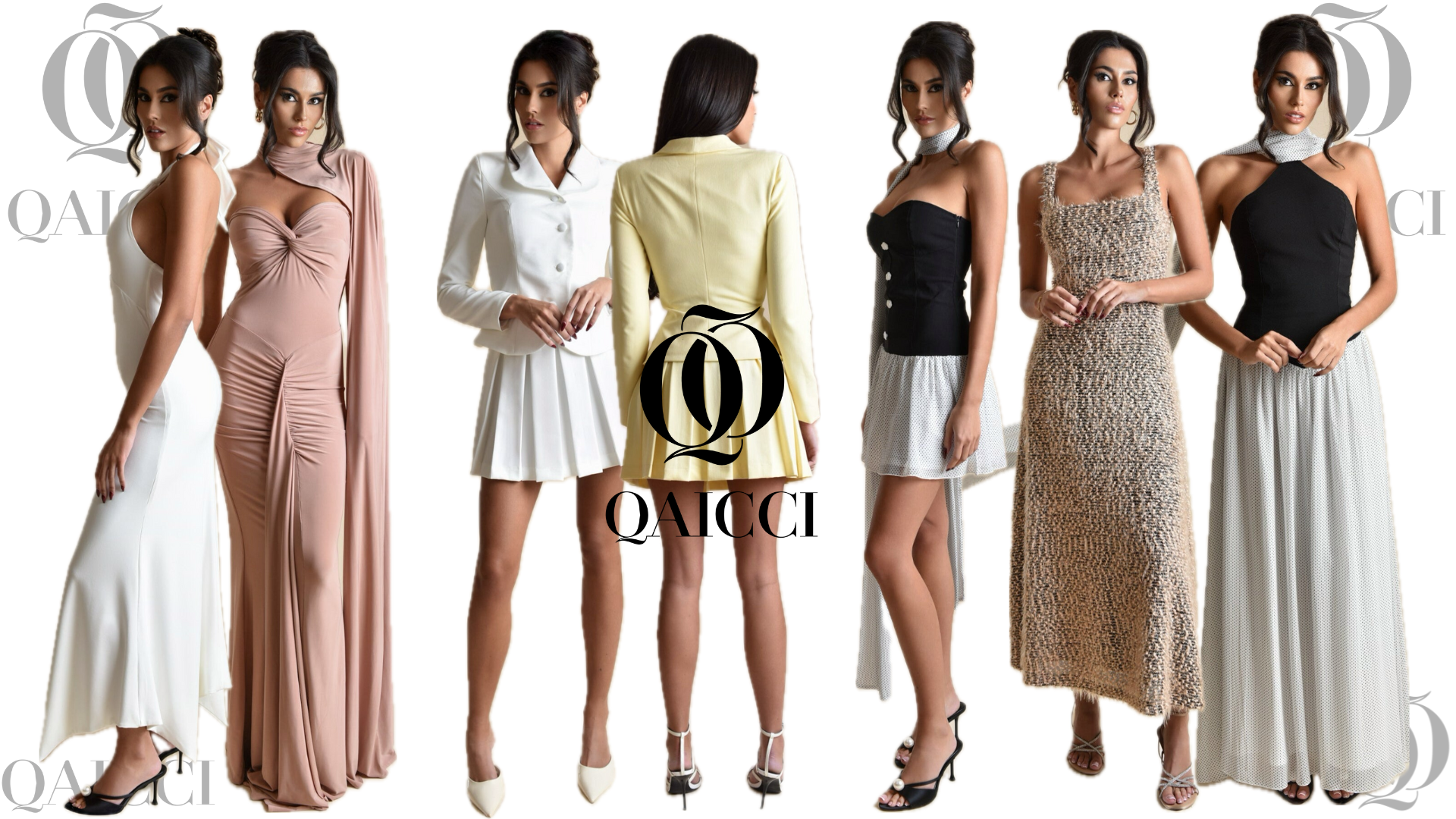





Article: Affordable Fashion is Polyester Centred Fashion

Affordable Fashion is Polyester Centred Fashion
The contemporary fashion consumer exists in a state of perpetual contradiction. They demand natural fibres, sustainable materials, and ethical production, yet recoil at the price tags that accompany these values. This cognitive dissonance has created a marketplace paradox where polyester, often vilified in sustainability discourse, remains the backbone of accessible fashion. The uncomfortable truth is that affordable fashion is, and will continue to be, polyester-centred fashion. Understanding why requires examining the economics of textile production, the realities of garment manufacturing, and the fundamental question: are consumers truly ready to put their money where their mouth is?
The Economics of Natural Versus Synthetic Fibres
The price differential between natural and synthetic fibres is not arbitrary; it reflects fundamental differences in production costs, supply chain complexity, and material properties. Cotton, wool, silk, and linen require extensive agricultural resources, seasonal growing cycles, and labour-intensive harvesting processes. According to Niinimäki et al. (2020) in their comprehensive review published in Nature Reviews Earth & Environment, natural fibre production is inherently resource-intensive, requiring significant water, land, and time investments that directly translate to higher consumer costs.
Polyester, by contrast, is derived from petroleum-based products and can be manufactured year-round in controlled industrial settings. The synthetic fibre industry benefits from economies of scale that natural fibre production cannot match. Textile economist Blackburn (2009) notes in Sustainable Textiles that polyester production costs approximately 40-60% less than comparable cotton production when accounting for yield consistency, processing efficiency, and supply chain stability. This cost advantage is not merely passed to manufacturers; it fundamentally enables the accessible price points that mass-market consumers demand.
The Performance Paradox
Beyond economics, polyester offers technical advantages that natural fibers struggle to replicate at comparable price points. The material's durability, wrinkle resistance, colour retention, and ease of care make it ideal for fast-paced modern lifestyles. Research by Muthu (2014) in Assessing the Environmental Impact of Textiles demonstrates that polyester garments typically outlast cotton equivalents by 2-3 times when subjected to regular wear and washing cycles.
This durability paradox challenges the sustainability narrative: a polyester garment worn 100 times may have a lower environmental impact per wear than a cotton garment worn 30 times before deterioration. Yet consumers often fixate on material origin rather than lifecycle analysis. Fletcher (2008) argues in Sustainable Fashion and Textiles that true sustainability requires moving beyond material fetishisation toward holistic assessments of garment longevity and utility.
Fashion as Art: The Quality Question
The assertion that fashion should be art, good art that everyone can appreciate and that stands the test of time, raises fundamental questions about accessibility and value. Art requires quality materials, skilled craftsmanship, and time. These inputs cost money. The Renaissance masters used expensive pigments and spent years perfecting single works. Similarly, exceptional garments require premium materials and expert construction.
However, democratising fashion means accepting that not all clothing can be museum-quality art. As Kawamura (2005) explains in Fashion-ology, fashion operates simultaneously as art, commerce, and social practice. The industry must serve multiple market segments, from haute couture to mass market. Polyester enables the mass market segment to exist—providing affordable options for consumers who cannot or will not pay premium prices.
The question becomes: should fashion be exclusively art, or should it also be accessible utility? The answer likely lies somewhere between these extremes, but achieving that balance requires honest conversations about cost, value, and consumer priorities.
The Sustainability Smokescreen
Much of the anti-polyester sentiment stems from legitimate environmental concerns. Microplastic pollution, petroleum dependency, and non-biodegradability are serious issues. However, Roos et al. (2016) in their study published in Environmental Science and Pollution Research found that the environmental impact of textiles depends more on production methods, garment longevity, and disposal practices than on fibre type alone.
Natural fibres carry their own environmental burdens. Conventional cotton production is notoriously water-intensive and pesticide-dependent. Sandin and Peters (2018), in their lifecycle assessment published in Journal of Cleaner Production, found that organic cotton, while better than conventional cotton, still requires significantly more resources than polyester production. Wool production contributes to methane emissions and land degradation. Silk production raises animal welfare concerns.
The point is not that polyester is environmentally benign, it is not. Rather, the environmental calculus is more complex than "natural good, synthetic bad." Yet consumers often embrace this oversimplification, demanding natural fibres without acknowledging the environmental and economic trade-offs involved.
The Price Tag Reality Check
When consumers encounter the true cost of sustainably produced, natural-fibre garments, sticker shock typically follows. A basic organic cotton t-shirt from an ethical brand might cost £40-60, compared to £5-10 for a conventional polyester-blend alternative. This 400-800% price differential is not profit gouging, it reflects the actual costs of sustainable production.
Henninger et al. (2016), in their research on sustainable fashion consumption published in the Journal of Fashion Marketing and Management, identified a persistent "attitude-behaviour gap" where consumers express strong preferences for sustainable fashion but rarely translate these preferences into purchasing behaviour. When faced with actual price differences, most consumers choose affordability over sustainability.
This gap reveals an uncomfortable truth: many consumers want the moral satisfaction of sustainable consumption without the financial sacrifice it requires. They want natural fibres at polyester prices, an economic impossibility given current production realities.
The Effort Equation
Quality fashion requires effort, from designers, manufacturers, and consumers. Designers must source premium materials and develop construction techniques that ensure longevity. Manufacturers must invest in skilled labour and quality control. Consumers must pay premium prices and care for garments properly to maximise their lifespan.
This effort equation is where many consumers falter. As Gwilt and Rissanen (2011) discuss in Shaping Sustainable Fashion, sustainable fashion requires active consumer participation, not just purchasing decisions but also garment care, repair, and thoughtful disposal. Many consumers are unwilling to invest this effort, preferring the convenience of cheap, disposable fashion.
Polyester enables this convenience-oriented consumption pattern. Its easy-care properties and low replacement cost align with modern lifestyles that prioritise convenience over longevity. Criticising polyester without acknowledging this consumer preference is intellectually dishonest.
The Class Dimension
The natural fibre preference often carries class implications that deserve examination. For affluent consumers, choosing organic cotton or linen is a lifestyle choice. For working-class consumers, polyester is an economic necessity. Demanding that all fashion be natural-fibre based effectively prices lower-income consumers out of the market.
Beard (2008) in The End of Fashion argues that fashion democratisation, the ability of people across economic strata to participate in fashion culture, is a significant social achievement. Polyester has been central to this democratisation. Dismissing polyester as inherently inferior ignores its role in making fashion accessible to broader populations.
Innovation and the Future
The future of affordable fashion likely involves improved polyester rather than its elimination. Recycled polyester, bio-based polyester alternatives, and innovations in microplastic capture during washing offer paths toward more sustainable synthetic fibres. Shirvanimoghaddam et al. (2020), in their review published in Science of the Total Environment, outline promising developments in sustainable synthetic textiles that maintain affordability while reducing environmental impact.
Additionally, blended fabrics combining natural and synthetic fibres can offer performance benefits of both while moderating costs. These pragmatic solutions acknowledge economic realities while working toward sustainability improvements.
Putting Money Where Mouths Are
The central question remains: are consumers ready to pay for their stated values? The evidence suggests most are not. Market data consistently shows that price remains the primary purchasing driver for the majority of consumers, with sustainability considerations ranking far lower in actual buying behavior despite stated preferences.
This is not necessarily hypocrisy, economic constraints are real, and not everyone can afford premium prices. However, it does require honesty about trade-offs. If consumers want affordable fashion, they must accept that it will be predominantly polyester-based. If they want natural fibres and sustainable production, they must accept higher prices and smaller wardrobes.
The middle ground, affordable, sustainable, natural-fibre fashion, is largely a fantasy given current production economics. Technological innovations may eventually change this calculus, but for now, the trade-offs are real and unavoidable.
Conclusion
Affordable fashion is polyester-centred fashion because economic, technical, and practical realities make it so. Natural fibres cost more to produce, require more resources, and often perform less well in everyday use. For fashion to be art, enduring, quality art, it requires investments that most consumers are unwilling or unable to make.
The path forward requires honesty from all stakeholders. Consumers must acknowledge the gap between their stated preferences and actual purchasing behaviour. The industry must continue innovating toward more sustainable synthetics while being transparent about costs and trade-offs. Policymakers must recognise that sustainability mandates without addressing affordability will simply price lower-income consumers out of the market.
Polyester is not the enemy; it is a tool that has democratized fashion access. The challenge is improving that tool while maintaining accessibility. Until consumers are genuinely ready to put their money where their mouth is, accepting higher prices, smaller wardrobes, and greater personal responsibility for garment care, polyester will remain central to affordable fashion. And perhaps that is not entirely a bad thing.
Salem Isegbe @QAICCI
Published 20th October 2025
References
Beard, N. D. (2008). The Branding of Ethical Fashion and the Consumer: A Luxury Niche or Mass-market Reality? Fashion Theory, 12(4), 447-468.
Blackburn, R. S. (Ed.). (2009). Sustainable Textiles: Life Cycle and Environmental Impact. Woodhead Publishing. https://www.sciencedirect.com/book/9781845694579/sustainable-textiles
Fletcher, K. (2008). Sustainable Fashion and Textiles: Design Journeys. Earthscan. https://www.routledge.com/Sustainable-Fashion-and-Textiles-Design-Journeys/Fletcher/p/book/9781844074594
Gwilt, A., & Rissanen, T. (Eds.). (2011). Shaping Sustainable Fashion: Changing the Way We Make and Use Clothes. Earthscan. https://www.routledge.com/Shaping-Sustainable-Fashion-Changing-the-Way-We-Make-and-Use-Clothes/Gwilt-Rissanen/p/book/9781849711654
Henninger, C. E., Alevizou, P. J., & Oates, C. J. (2016). What is Sustainable Fashion? Journal of Fashion Marketing and Management, 20(4), 400-416. https://www.emerald.com/insight/content/doi/10.1108/JFMM-07-2015-0052/full/html
Kawamura, Y. (2005). Fashion-ology: An Introduction to Fashion Studies. Berg Publishers. https://www.bloomsbury.com/uk/fashionology-9781350109506/
Muthu, S. S. (Ed.). (2014). Assessing the Environmental Impact of Textiles and the Clothing Supply Chain. Woodhead Publishing. https://www.sciencedirect.com/book/9781782421122/assessing-the-environmental-impact-of-textiles-and-the-clothing-supply-chain
Niinimäki, K., Peters, G., Dahlbo, H., Perry, P., Rissanen, T., & Gwilt, A. (2020). The Environmental Price of Fast Fashion. Nature Reviews Earth & Environment, 1(4), 189-200. https://www.nature.com/articles/s43017-020-0039-9
Roos, S., Sandin, G., Zamani, B., & Peters, G. (2016). Environmental Assessment of Swedish Fashion Consumption. Environmental Science and Pollution Research, 23(16), 16654-16663. https://link.springer.com/article/10.1007/s11356-016-6979-7
Sandin, G., & Peters, G. M. (2018). Environmental Impact of Textile Reuse and Recycling. Journal of Cleaner Production, 184, 353-365. https://www.sciencedirect.com/science/article/abs/pii/S0959652618303196
Shirvanimoghaddam, K., Motamed, B., Ramakrishna, S., & Naebe, M. (2020). Death by Waste: Fashion and Textile Circular Economy Case. Science of the Total Environment, 718, 137317. https://www.sciencedirect.com/science/article/abs/pii/S0048969720310421

Written by Shams Barmake